 What Are Pesticide Residues?
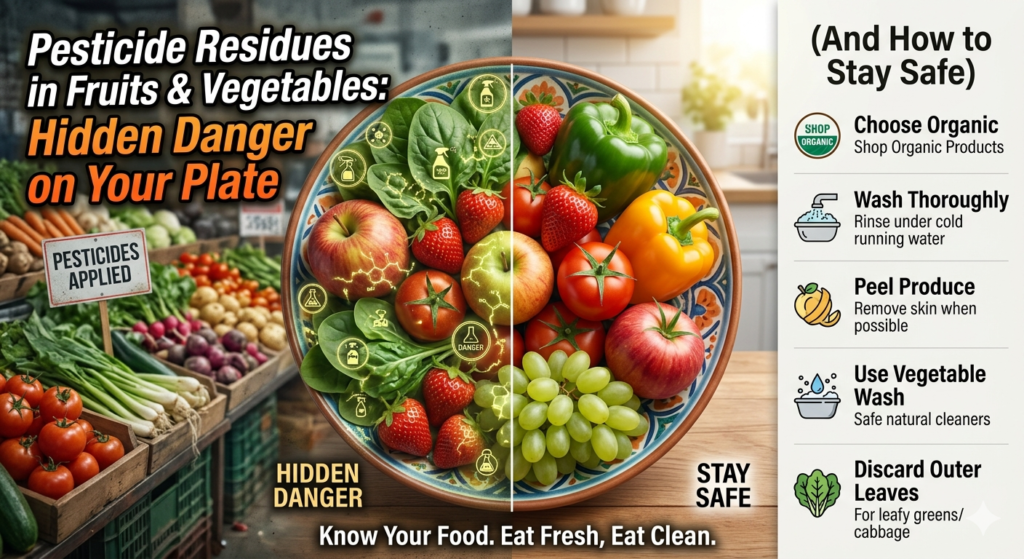
Every shiny apple and spotless vegetable may look fresh—but appearances can be deceiving. Farmers often use pesticides to protect crops from insects, fungi, and weeds. However, traces of these chemicals, known as pesticide residues, can remain on or inside the produce even after harvest.
These residues are regulated globally, but in many cases—especially in developing markets—levels may exceed safe limits due to overuse or improper handling.
 Why Should You Be Concerned?
You might be consuming pesticides daily without even realizing it. Over time, even small amounts can accumulate in the body and lead to serious health risks.
 Short-Term Effects
- Nausea and vomiting
- Skin irritation and allergies
- Headaches and dizziness
 Long-Term Health Risks
- Hormonal imbalance (endocrine disruption)
- Reduced fertility and reproductive disorders
- Neurological problems
- Increased risk of cancers
- Developmental issues in children
Certain pesticides, especially organophosphates, directly affect the nervous system—making them particularly dangerous.
 Why Children Are at Higher Risk
Children are more vulnerable because:
- Their immune and detox systems are still developing
- They consume more food relative to body weight
- Early exposure can affect brain development
This makes pesticide contamination not just a health issue—but a future generation crisis.
 Most Commonly Contaminated Foods
Some fruits and vegetables are more prone to pesticide residues:
- Apples

- Grapes

- Spinach
- Tomatoes

- Strawberries

- Chillies

These are often sprayed multiple times during cultivation.
 Does Washing Remove Pesticides?
Yes—but only partially.
Effective Methods:
- Washing under running water (removes surface residues)
- Soaking in salt water or baking soda solution
- Peeling (but may reduce nutritional value)
However, systemic pesticides (absorbed inside tissues) cannot be removed easily.
 The Real Problem: Invisible Contamination
Most consumers rely on trust because pesticide residues are:
- Invisible
- Odorless
- Tasteless
Without proper testing, there is no way to know what you’re consuming.
 The Solution: Smarter Detection & Safer Choices
1.  Use Rapid Detection Kits (PestiSure)
Innovations in food safety now allow on-the-spot pesticide detection. DIY kits can help households, retailers, and institutions quickly screen food before consumption.
 This is where solutions like rapid testing kits (such as those developed by biotech startups like Zenomix BioLab) are transforming food safety.
2.  Choose Organic or Certified Produce
Look for:
- Certified organic labels
- Trusted local farmers
- Seasonal produce (less chemical dependency)
3. Policy & Awareness
- Stronger monitoring systems
- Farmer education on safe pesticide use
- Public awareness campaigns
 The Future: From Blind Trust to Smart Testing
Food safety is no longer just a government responsibility—it’s becoming a consumer-driven movement.
Imagine a future where:
- Every household tests food before consumption
- Vendors display safety certification instantly
- Contaminated produce is rejected in real-time
This shift is already beginning—and technology is leading the way.
 Final Thoughts
Pesticide residues are a silent threat—but not an unstoppable one.
With awareness, better practices, and accessible testing technologies, we can protect our families and demand safer food systems.
 Take Action Today
- Wash your produce properly
- Stay informed
- Consider using rapid testing kits-like PestiSure
- Support safe and sustainable farming
 Safe Food = Healthy Life
0 Comments