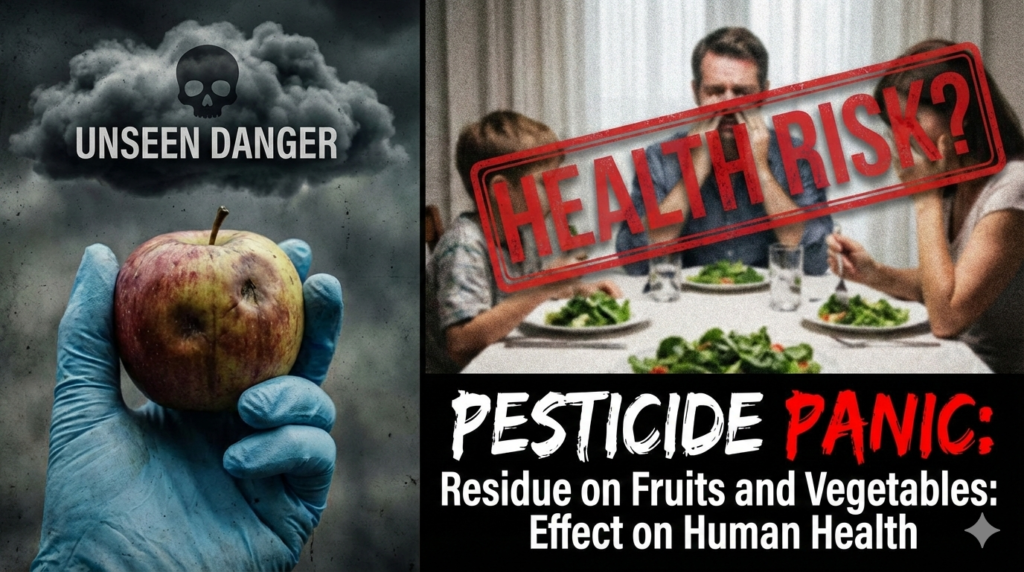
Understanding the Hidden Danger
Every day, billions of people consume fruits and vegetables believing they are making the healthiest choice for their families. However, beneath the vibrant skin of these nutritious foods lies an often-invisible threat: pesticide residues. According to the FDA, approximately 207 different pesticide residues are detected on foods, with nearly 62% of vegetables and 82% of fruits containing measurable pesticide residues even after washing.
The irony is striking—while fruits and vegetables are essential for good health, the very chemicals used to protect them during cultivation may pose serious health risks when consumed over prolonged periods. This blog explores the complex relationship between pesticide residues and human health, offering evidence-based insights and practical solutions for informed consumers.
What Are Pesticide Residues?
Pesticide residues are the traces of pesticides remaining on or in food after pesticides have been applied to crops. These residues include active pesticide ingredients and their metabolites (breakdown products). Farmers apply pesticides to protect crops from insects, diseases, and weeds, significantly improving yields and reducing crop losses.
However, pesticide residues persist on produce even after harvesting, washing, and processing. The food supply chain industry manages these residues through regulatory frameworks like the Acceptable Daily Intake (ADI) and Maximum Residue Limits (MRLs), established by international bodies such as the FAO/WHO and enforced by national food safety authorities.
Health Effects: From Acute to Chronic
Pesticide exposure affects human health through multiple pathways and can result in both immediate and long-term consequences.
Acute Health Effects
High levels of pesticide exposure can cause acute poisoning with immediate symptoms:
Nausea and vomiting
Dizziness and headaches
Respiratory distress
Eye and skin irritation
Sore throat
Diarrhea
In severe cases: seizures or loss of consciousness
These acute effects typically occur with high-dose exposure, such as in agricultural workers or accidental ingestion scenarios.
Chronic Health Effects
Long-term consumption of pesticide-contaminated food has been associated with serious health conditions:
Neurological Disorders: Organophosphate and carbamate pesticides affect the nervous system, potentially leading to tremors, memory loss, cognitive impairments, and increased risk of neurodegenerative diseases like Parkinson’s and Alzheimer’s.
Cancer: Research has substantiated links between pesticide exposure and various cancers, including non-Hodgkin lymphoma and leukemia. Some pesticides contain carcinogenic compounds that can lead to tumor formation.
Reproductive Issues: Pesticide exposure has been linked to premature births, congenital malformations including neural tube defects, spontaneous abortions, and increased genetic damage in humans.
Endocrine Disruption: Many pesticides interfere with hormonal systems, causing hormonal imbalances and metabolic issues.
Developmental Problems: Children exposed to pesticides during fetal development show associations with attention difficulties, learning problems, and developmental delays.
A Critical Research Finding
A landmark study published in 2021 analyzed data from three large U.S. cohorts (27,026 deaths documented during 3,081,360 person-years of follow-up):
Participants consuming ≥4 servings/day of low-pesticide-residue fruits and vegetables had 36% lower mortality risk compared to those consuming <1 serving/day
Participants consuming the same amount of high-pesticide-residue produce showed no protective benefit and actually increased mortality risk
This research reveals that pesticide residues can offset the well-documented health benefits of fruit and vegetable consumption, especially for cardiovascular disease mortality.
The Dirty Dozen and Clean Fifteen: Your Shopping Guide
Understanding which produce items carry the highest pesticide loads empowers consumers to make informed purchasing decisions.
The Dirty Dozen 2025 (Highest Pesticide Residues)
The Environmental Working Group (EWG) tested 53,692 samples of 47 fruits and vegetables and identified the 12 most contaminated:
| Rank | Produce | Key Finding |
|---|---|---|
| 1 | Spinach | Highest pesticide residue by weight |
| 2 | Strawberries | High toxicity pesticides detected |
| 3 | Kale, Collards, Mustard Greens | Multiple harmful pesticides |
| 4 | Grapes | Persistent residues |
| 5 | Peaches | High concentration pesticides |
| 6 | Cherries | Multiple detections |
| 7 | Nectarines | High toxicity profile |
| 8 | Pears | Cumulative residues |
| 9 | Apples | Surface contamination |
| 10 | Blackberries | New to list (2025) |
| 11 | Blueberries | High residue levels |
| 12 | Potatoes | New to list (2025) |
Key Statistics:
203 different pesticides found on Dirty Dozen produce
96% of Dirty Dozen samples contained pesticides
Every produce type (except potatoes) averaged 4+ pesticides per individual sample
Spinach, bell/hot peppers, kale, and green beans showed highest toxicity
The Clean Fifteen 2025 (Lowest Pesticide Residues)
These 15 produce items had significantly lower pesticide loads:
Pineapple, Sweet Corn, Avocados, Papaya, Onions, Sweet Peas (frozen), Asparagus, Honeydew Melon, Kiwi, Cabbage, Watermelon, Mushrooms, Mangoes, Sweet Potatoes, Carrots
Key Statistics:
Nearly 60% had zero detectable pesticide residues
Only 16% had 2 or more pesticide residues
Avocado, papaya, pineapple, onion, and sweet corn were among the lowest
No individual sample exceeded 3 pesticides
Organic vs. Conventional: The Pesticide Content Comparison
Choosing organic produce significantly reduces pesticide exposure:
Comparative Risk Analysis:
Conventional vegetables contain 55 times higher pesticide residues than organic
Conventional fruits contain 115 times higher pesticide residues than organic
Organic produce shows pesticide residues approximately one-third as often as conventional
Organic samples typically contain residues 5 times lower than conventional
Why the Difference?
Organic farming relies on natural processes and biological pest management rather than synthetic chemicals. Practices include:
Crop rotation
Natural predators for pest control
Composting and soil enrichment with organic matter
Plant-based pesticides (permitted in organic standards)
Integrated Pest Management (IPM) techniques
Transitioning merely 1.2% of cropland used for fruits and vegetables to organic production would significantly reduce dietary pesticide exposure across the population.
Effective Methods to Remove Pesticide Residues
While organic produce is ideal, proper washing techniques can substantially reduce pesticide residues on conventional produce.
Washing Effectiveness Comparison
| Method | Effectiveness | Duration |
|---|---|---|
| Plain water rinse | 25-50% removal | 30 seconds |
| Vinegar solution (1:3 ratio) | Up to 98% removal | 15 minutes |
| Baking soda solution | Most effective (scientific study) | 12-15 minutes |
| Salt water (2% concentration) | 80% removal | 10-15 minutes |
| Commercial washes | No better than water | Variable |
Step-by-Step Washing Protocol
For Leafy Greens (Spinach, Kale, Lettuce):
Soak in cold water for 2-3 minutes
Gently agitate leaves
Rinse thoroughly under running water
Dry with clean cloth or paper towel
For Firm Produce (Apples, Carrots, Potatoes):
Use a vegetable brush under running water
Apply baking soda solution for enhanced removal
Scrub surface thoroughly
Rinse well and dry
For Berries and Soft Fruits:
Place in colander
Spray gently with water or light vinegar solution
Avoid soaking which damages delicate fruits
Pat dry gently
For Root Vegetables:
Remove damaged areas
Scrub with brush under running water
Use salt water solution for additional cleaning
Repeat 2-3 times for maximum residue removal
Important Notes:
Plain running water for one minute is as effective as commercial produce washes
Peeling can remove most surface residues but also removes valuable nutrients found in skin
Soap should never be used on produce (not designed for food contact)
Proper washing combined with varied produce consumption minimizes cumulative pesticide exposure
The Indian Scenario: Pesticide Residues in Local Produce
India faces unique challenges regarding pesticide residue management due to agricultural practices, climate conditions, and regulatory oversight.
Key Findings from Indian Research
A comprehensive seven-year monitoring study (2013-2020) analyzed 966 vegetable samples from northern and northwestern India:
Cabbage: 94.4% had no pesticide residues
Green Chilli: 34.5% had no residues; 65% detection rate
Okra: 61% had no residues; 39% detection rate
Most commonly detected pesticides: Profenofos, Acetamiprid, Imidacloprid, Metalaxyl
Regulatory Standards in India:
FSSAI (Food Safety and Standards Authority of India) sets MRL at 0.01 mg/kg for most foods
213 MRL values established for various pesticides
2.6% of samples exceeded maximum residue limits according to government monitoring
A 2024 report found 16% of samples had pesticide concentrations beyond permissible limits
Specific Concerns:
Chlorpyrifos concentration in some Indian-grown vegetables exceeds safe levels
Potatoes accumulate the highest pesticide levels among vegetables
Rice contains concerning levels of chlorpyrifos in some regions
Southern and eastern regions show higher pesticide concentrations than other areas
Vulnerable Populations: Special Considerations
Children
Developing bodies more susceptible to toxic effects
Higher exposure relative to body weight
Associated with attention difficulties, learning problems, and developmental delays
Fetal exposure linked to reduced cognitive development
Pregnant Women
Pesticide exposure during pregnancy may elevate risk of:
Premature birth
Low birth weight
Fetal mortality
Neural tube defects
Congenital malformations
Elderly
Compromised immune and detoxification systems
Accumulation of persistent pesticides over lifetime
Increased susceptibility to neurological effects
Building a Safer Produce Diet: Practical Recommendations
Strategy 1: Prioritize Organic for High-Risk Produce
Organic versions should be purchased for Dirty Dozen items when budget allows, particularly for households with children or pregnant women.
Strategy 2: Mix Smart Conventional Shopping
For budget-conscious consumers, purchase conventional Clean Fifteen items and organic Dirty Dozen items, creating a balanced risk reduction.
Strategy 3: Proper Washing Protocol
Apply evidence-based washing methods (baking soda solution or vinegar soak) to all conventional produce.
Strategy 4: Diversify Produce
Consuming varied produce types reduces cumulative exposure to specific pesticides. Rotation prevents accumulation of a single pesticide residue.
Strategy 5: Support Organic Transition
Purchase from local organic farmers, farmer’s markets, and CSA (Community Supported Agriculture) programs to support sustainable agriculture adoption.
Strategy 6: Store-Level Selection
Choose produce with visible quality (fewer blemishes)
Ask grocery stores about pesticide testing practices
Support retailers offering third-party pesticide verification
Beyond Individual Action: Policy and Systems Level Changes
While individual choices matter, systemic changes are essential:
Regulatory Strengthening: Enhanced MRL enforcement and regular monitoring
Agricultural Transition Support: Government incentives for farmers switching to organic practices
Research Funding: Investigation into integrated pest management and biotech alternatives
Consumer Education: School programs teaching food safety and pesticide awareness
Trade Harmonization: Alignment of international pesticide standards
Conclusion: A Balanced Perspective
Pesticide residues on fruits and vegetables represent a legitimate public health concern requiring informed consumer action. The evidence is clear: low-pesticide-residue produce consumption is associated with 36% lower mortality risk compared to high-pesticide alternatives, while high-pesticide produce shows no health benefit despite its nutritional content.
However, the solution is not avoidance. The benefits of consuming fruits and vegetables far outweigh the risks of pesticide residues—the key is conscious consumption. By understanding the Dirty Dozen and Clean Fifteen lists, implementing proper washing techniques, prioritizing organic options for high-risk items, and supporting agricultural transitions toward sustainable practices, consumers can significantly reduce their pesticide exposure while enjoying the immense health benefits of plant-based foods.
The goal is not perfection but progress: each informed choice moves toward a food system that nourishes human health and protects environmental integrity for generations to come.

0 Comments